
Autumn Festivals in Tuscia: Chestnuts, Porcini and the Villages of the Cimini Mountains

The autumn festivals in Tuscia are the most honest way to get to know this corner of Italy. From mid-September to early November, the villages of the Cimini mountains fill up with roasted chestnuts, tufa-rock cellars turned into dining rooms, historical parades and the smell of the woods. This isn't folklore staged for visitors: it is the farming calendar that has always been here, simply opened up to anyone willing to join in.
If you are thinking about a slow stay in October or November, this is the right moment. The light is still generous, the chestnut woods turn from green to gold, the roads are empty and the villages go back to being villages rather than postcards. Below you will find the main festivals, what to eat, and how to plan your weekends with Viterbo — and Podere dell'Arco — as your base.
Why autumn is the best season to visit Tuscia
Summer here is lovely, but autumn is truer. In a few weeks the land lines up the three harvests that define it: porcini mushrooms from the Cimini woods in September, chestnuts through October, olives from late October into November.
It is also when the landscape is at its best: the beech forest of Monte Cimino, a UNESCO World Heritage site, the mule tracks winding through centuries-old chestnut groves, Lake Vico wrapped in morning mist. And then there is the simple practical pleasure of travelling off-season — no queues at the monuments, free tables in the trattorias, kinder rates.
Porcini mushroom festivals: September opens the season
The first scent of a Cimini autumn is porcini. The chestnut and beech woods here have always been among the most generous in Lazio, and the mushroom festivals open the calendar before the chestnuts even arrive.
Oriolo Romano — Sagra del Fungo Porcino
2026 dates: 11, 12, 13 and 18, 19, 20 September. One of the best-attended porcini festivals in the province: food stalls, craft markets and live music in a small, well-kept village that grew up around a sixteenth-century fief. It is just under an hour's drive from Podere dell'Arco — a good excuse for a day trip to the southern edge of Tuscia.
Canepina — Sagra del Fungo Porcino
2026 dates: Saturday 19 and Sunday 20 September, second edition. This is the more intimate, village version: dinner in the Santa Corona cellar, live music, and on Saturday afternoon a mushroom-hunting walk through the chestnut groves led by the local mycological association. Sunday morning starts with a walk in the Cimini woods. If you want Tuscia unfiltered, this is the day.
San Martino al Cimino — chestnuts and porcini together
This abbey village on the edge of Viterbo — a seventeenth-century elliptical square, a Cistercian abbey, woods all around — traditionally devotes two October weekends to a double festival: chestnuts and porcini, with stalls, markets and historical re-enactments. It is by far the easiest one to reach from us: a few minutes by car and you are in the middle of it.
📅 2026 dates still to be announced. The official programme of the Tuscia Chestnut Festivals is published each year between late September and the first days of October: check the town council and Pro Loco channels before setting off.
The Tuscia Chestnut Festivals: October in the Cimini villages
October belongs to the chestnut. Six villages in the Cimini mountains — Soriano nel Cimino, Canepina, Vallerano, Caprarola, San Martino al Cimino and Latera — take turns across consecutive weekends in a coordinated programme that covers almost the whole month. Change village every Sunday and you will have crossed the entire chestnut-growing area of the province, more than two thousand hectares of it on these hills.
Soriano nel Cimino — Chestnut Festival, 59th edition
2026 dates: 2 to 18 October (the first three weekends of the month). This is the famous one, and not only because of the chestnuts: since the fifteenth century the town has celebrated its fruit with a historical re-enactment that today involves the whole community across four districts, with costumed parades, musicians, flag-throwers, falconers, the Ring Joust and the Palio delle Contrade. The opening ceremony, with the blessing and investiture of archers and knights, takes place in Piazza Vittorio Emanuele II.
Above the village stands the Orsini Castle; around it, chestnut woods and the erratic boulders of Sasso Menicante. Some evening events are ticketed, with tickets available online — worth organising in advance, because the village genuinely fills up at weekends.
Vallerano — Festa della Castagna DOP
Vallerano is the home of the Castagna di Vallerano DOP, protected since 2009. Here the festival happens inside historic cellars hand-carved into the tufa rock and run by the village associations: fixed traditional menus, wine, roasted chestnuts, and outside, craft markets, guided village tours and walks among the old chestnut groves. It traditionally runs every Saturday and Sunday in October, through the All Saints' weekend. Vallerano is about twenty kilometres from Viterbo.
Canepina — Giornate della Castagna
Canepina is the leading chestnut-growing village in the province, with almost 800 hectares under cultivation. Its festival, held every Sunday in October, means open cellars, historical parades, guided village walks in the morning, and dishes you will not find elsewhere: ceciliani and fieno canepinese, handmade pasta prepared by the village women, and cakes made with chestnut flour. On the main days a free shuttle bus runs from the industrial estate to the centre — use it, parking in the village is a small adventure.
Caprarola and Latera — the other two stops
In Caprarola the chestnut festival pairs naturally with a visit to Palazzo Farnese, one of the masterpieces of Italian Mannerism: two experiences in a single day. Latera, on the Lake Bolsena side, celebrates the marrone chestnut with its own Festa del Marrone, in a volcanic landscape completely different from the Cimini one. Both usually fall in the second half of October.
What you will actually eat
A short guide so you order well:
Caldarroste — roasted chestnuts in paper cones, often handed out free in the square by the Pro Loco.
Castagnaccio, sweet tortelli and chestnut-flour cakes — the sweet side of the woods.
Fettuccine and soups with porcini — at the September festivals, with mushrooms picked that same day.
Ceciliani and fieno canepinese — Canepina's own pasta, to be eaten in a cellar.
New wine and new olive oil — from late October, when the mills start running.
Cheese, cured meats, honey and Cimini hazelnuts — on the market stalls.
One tip: in the cellars you eat seated, from a fixed menu, and places run out. Where booking is possible, book.
Beyond the festivals: what to do in between
The festivals mostly occupy Saturdays and Sundays. On weekdays, autumn in Tuscia is all yours:
Viterbo, the medieval San Pellegrino quarter and the Palace of the Popes, minutes from the Podere.
Villa Lante in Bagnaia, whose Renaissance gardens are at their most theatrical in autumn colour.
Civita di Bagnoregio, spectacular on misty mornings.
The Park of the Monsters in Bomarzo and the Etruscan necropolises.
The thermal waters of the Viterbo basin, even better once the air turns cold.
Hiking in the Monte Cimino beech forest and along the paths through the chestnut groves.
Where to stay: Podere dell'Arco as your base
Podere dell'Arco is a fifteenth-century farmhouse set in thirty hectares of olive groves, fields and lavender, a couple of kilometres from the historic centre of Viterbo. From here almost all the chestnut villages — San Martino al Cimino, Soriano, Vallerano, Canepina, Caprarola — are within half an hour's drive: you can change festival every day and come back in the evening to the quiet of the countryside.
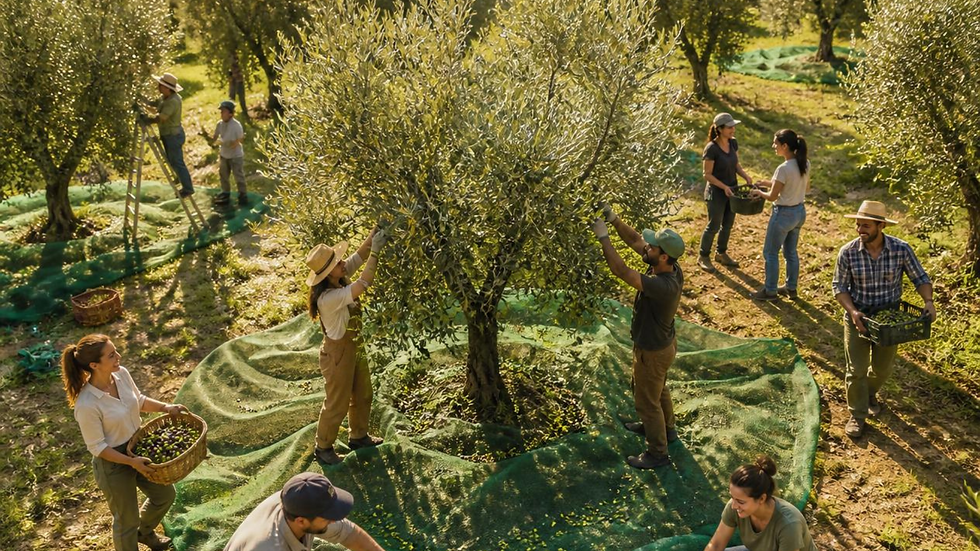
The apartments are self-contained and come with a fully equipped kitchen, which means the porcini, chestnut flour and cheese you buy at the market in the morning can become your dinner. Breakfast is homemade. And if you come between late October and November, you will most likely catch the olive harvest and the first pressing of our Il Signorino oil, straight from the mill.
This is what we like to call understated luxury: no entertainment programme, no fixed schedule. Just a good place to start from, and the time to come back to it slowly.
Planning the perfect weekend: 6 practical tips
Always double-check the dates on the official festival and Pro Loco channels — programmes are updated until the last minute.
Arrive early, especially on Sundays: after 11am the village car parks are full. Where a shuttle runs, take it.
Bring cash: many cellars and stalls do not take cards.
Dress in layers and wear comfortable shoes: the old centres are steep and paved in basalt, and evenings on the hills get cold.
One festival a day, not two: these are places to linger in, not to collect.
Book your stay early: October weekends are the busiest of the Viterbo autumn.
Frequently asked questions
When do the chestnut festivals in Tuscia take place? From the beginning of October until the All Saints' weekend, concentrated on Saturdays and Sundays. The porcini mushroom festivals open the season in September.
Which is the most famous chestnut festival in Tuscia? Soriano nel Cimino, reaching its 59th edition in 2026 and combining a food festival with a full medieval re-enactment, from 2 to 18 October.
Where can I eat the best porcini mushrooms in Tuscia? At the September festivals in Oriolo Romano and Canepina, where the mushrooms are picked in the Cimini woods and cooked the same day.
Are the festivals suitable for families with children? Yes. Almost all of them include markets, games, falconry displays, costumed parades and workshops for younger visitors.
Do I need to book to eat in the cellars? For the open-air food stalls, generally no. For lunch or dinner in the historic cellars of Vallerano and Canepina, booking is strongly recommended.
Where is the best place to stay to visit several festivals? Viterbo or the countryside around it: it sits right in the middle of the Cimini villages, all within twenty to thirty minutes by car.
Experience a Tuscia autumn the way locals do. The apartments at Podere dell'Arco are the ideal base for chestnut season and the weeks of the new olive oil.
Comments